



Your home affects how you think and feel every day.
When your space is filled with items that no longer support you, it can create a sense of heaviness or mental overwhelm.
Even if you don’t consciously notice it, your mind is always processing what’s around you.
Decluttering isn’t about having a perfect home. It’s about making room for ease, clarity, and emotional calm.
By clearing what you no longer need, you create space that allows your thoughts to slow down and your body to relax.
Even one small area at a time can bring relief. A lighter space invites a lighter, more peaceful state of mind.

 What Is Decluttering and Why It Matters for Your Mental Health
 What Is Decluttering and Why It Matters for Your Mental Health
Decluttering is more than cleaning or organizing.
It’s the intentional process of choosing what supports your well-being and letting go of what adds stress or emotional weight.
Every item in your home influences your mood, energy, and sense of peace.
When your space feels crowded, your mind can feel crowded too.
Clutter asks your brain to process more at once, which can lead to tension or mental fatigue without you fully realizing it.
Decluttering is not about perfection. It’s about creating space that feels calm, nurturing, and easier to be in.
When you release items that no longer serve you, you create room for clarity, steady breathing, and a more peaceful daily rhythm.
Even small steps can make a noticeable emotional shift.
 Clears Physical Clutter
 Reduces Visual Noise
 Releases Emotional Baggage
 Creates Open, Peaceful Space
 The Mental Health Benefits of Decluttering
 The Mental Health Benefits of Decluttering
 Less Stress and Emotional Overwhelm
 Less Stress and Emotional Overwhelm
Clutter adds mental noise. Even when you’re not thinking about it, your nervous system is processing every object in your space.
A clearer environment helps your mind settle, making it easier to breathe, relax, and feel emotionally lighter.
Small steps, like clearing one shelf or drawer, can make a noticeable difference.
Improved Focus and Clearer Thinking
When your surroundings are crowded, your attention is pulled in many directions at once.
Decluttering reduces visual distractions, helping your thoughts feel more organized and steady.
A simpler space supports a calmer, more focused mind.
A Stronger Sense of Control and Stability
 A Stronger Sense of Control and Stability
Clutter can represent unfinished decisions.
Decluttering offers a gentle way to regain direction and structure in your daily life.
Each small choice to let go strengthens your sense of empowerment and emotional grounding.
Reduced Anxiety and Mental Load
Every item you own requires some level of attention or care.
When there are fewer things to manage, your mind has more room to rest.
Decluttering helps reduce overwhelm, making daily tasks feel easier and more manageable.
Better Sleep and Restful Evenings
A calm environment supports a calm body.
When the spaces where you unwind are clear and peaceful, your mind is better able to release the day and transition into deep, restorative sleep.
Why Clutter Affects the Mind: The Psychology Explained
Your environment sends signals to your brain all day long.
When your space is filled with clutter, your mind receives more information to process.
Even if you’re not thinking about it consciously, your nervous system is still working in the background, assessing and interpreting your surroundings.
This can lead to mental fatigue, irritability, or the feeling of being “on edge” without knowing why.
Clutter also represents unfinished tasks or decisions you haven’t made yet.
Seeing those items repeatedly can quietly remind you of what you “should” be doing, which increases stress and self-pressure.
Over time, this can contribute to anxiety or emotional overload.
A clear, calm space supports a calmer mind. When your environment feels open and organized, your brain has fewer stimuli to manage, which allows your thoughts to settle.
This reduces cognitive load and creates room for clarity, ease, and peace.
Creating a peaceful environment is not about perfection. It’s about giving your mind space to rest and your heart space to breathe.
Emotional Clutter vs. Physical Clutter
 Emotional Clutter vs. Physical Clutter
Clutter isn’t just physical. Many items in our homes carry memories, meaning, or emotional weight.
Some belongings remind us of joyful moments or personal growth, while others may hold the energy of stress, loss, or past seasons of life.
When we keep objects that no longer reflect who we are now, they can quietly anchor us to old emotions that feel heavy or draining.
Letting go is not the same as forgetting or dismissing what mattered.
It’s a loving act of release. It’s acknowledging that you’ve grown and that certain things no longer need to take up space in your environment or in your heart.
As you declutter, you may notice emotional shifts.
Sometimes it feels freeing. Sometimes it feels tender. Both are completely natural.
The goal isn’t to force anything. It’s simply to create room for clarity, peace, and new beginnings.
A lighter space supports a lighter emotional life.
 Items you no longer use
 Feelings, stories, or seasons you’re ready to release
 Objects taking up space in your home
 Thoughts taking up space in your mind
 Visual clutter that overwhelms focus
 Emotional clutter that weighs on the heart Letting go opens physical space
 Letting go opens emotional peace
 Gentle Ways to Start Decluttering (Without Overwhelm)
Decluttering doesn’t need to happen all at once.
Large projects can feel intimidating, so it’s helpful to start small and move slowly.
Focus on one area at a time, like a single shelf, drawer, or surface.
When your brain can see a clear beginning and end, the process feels lighter and more achievable.
Set a gentle time limit, like 5 or 10 minutes. When the timer ends, you’re done.
Small steps repeated consistently create meaningful change. This keeps progress steady without exhausting your energy.
As you declutter, try asking one simple question: “Does this support who I am today and who I am becoming?” If the answer is no, it may be time to lovingly let it go.
Keep a donation box nearby so items can leave your home easily.
Celebrate progress as it unfolds. Every cleared space invigorates your mind, emotions, and nervous system.
Decluttering works best when it feels gentle, not forced. You are not cleaning. You are creating peace.
How to Maintain a Peaceful, Decluttered Space Over Time
 How to Maintain a Peaceful, Decluttered Space Over Time
Once your space begins to feel clearer, the goal is to maintain that sense of calm without adding pressure or rigid rules.
Think of your home as an environment that continually supports your well-being, rather than a project you must constantly manage.
Try adopting the “one in, one out” habit.
When something new enters your space, release something similar that you no longer need.
This keeps your environment balanced over time.
You can also choose small reset moments, like tidying one surface at the end of the day or folding blankets before bed.
These little rituals help your mind wind down and restore a sense of order.
Most importantly, stay gentle with yourself. A peaceful space is created through consistent care, not perfection.
Let your home feel like a place that holds you with comfort, ease, and room to breathe.
FAQs
Yes. Studies show that clutter increases the brain’s stress response.
When your space has fewer visual distractions, your nervous system can relax more easily.
Even small amounts of decluttering can noticeably lower tension.
This is very common. Many items hold memories, identity, or comfort.
You don’t need to force anything. Go slowly. Start with items that feel neutral, not emotional.
With time, clarity grows, and releasing becomes gentler and easier.
Start with one small space that doesn’t feel emotionally heavy, like a bathroom drawer or one shelf.
Set a five-minute timer, clear what you can, and stop. Small progress counts.
Overwhelm fades when the steps feel doable.
There’s no set schedule. Some people prefer small weekly resets, while others declutter seasonally.
Choose a rhythm that feels supportive, not stressful. The goal is peace, not perfection.
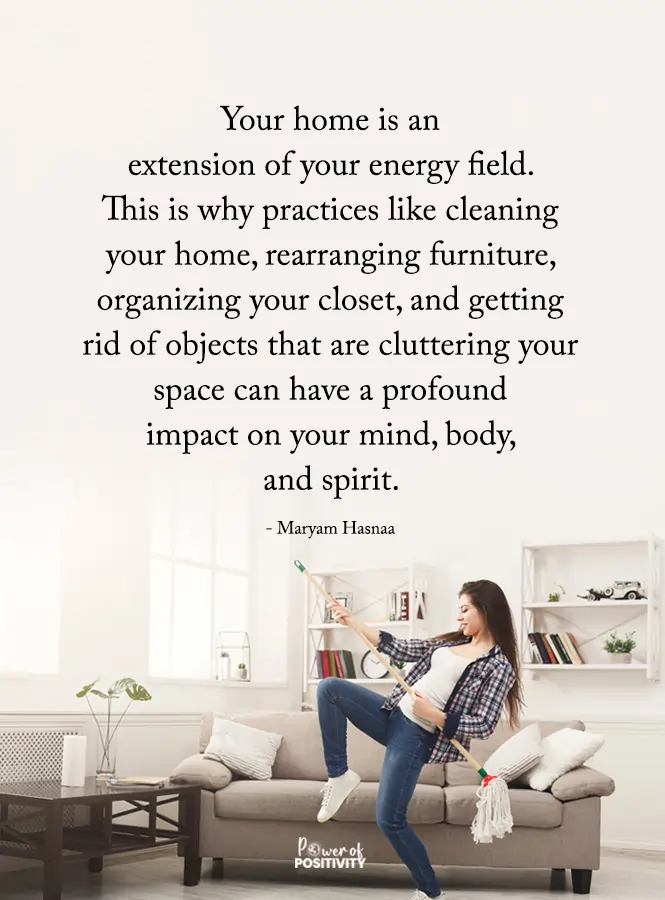
Final Thoughts: A Lighter Space Supports a Lighter Mind
 Final Thoughts: A Lighter Space Supports a Lighter Mind
Decluttering is an ongoing act of care, not a task to finish.
There is no rush. Each small step creates more room for calm, clarity, and emotional balance.
As you release what no longer supports you, your space becomes easier to breathe in, and your mind begins to feel more open and steady.
Progress matters more than perfection.
Celebrate the shifts you notice, no matter how small they seem. A peaceful environment is a gift you give yourself.
You deserve a home that feels gentle, grounding, and supportive to your well-being.
The post How Decluttering Your Home Improves Focus and Reduces Stress appeared first on Power of Positivity: Positive Thinking & Attitude.