


Negative thought loops rarely show up as loud panic.
For many men, they appear as quiet overthinking, replayed conversations, or mental pressure that never fully shuts off.
You keep moving, solving problems, handling responsibilities, yet your mind keeps circling the same doubts, frustrations, or worst-case scenarios.
Gratitude is often misunderstood as ignoring problems or forcing positivity. That is not what this practice is about.
Used correctly, gratitude works as an interruption.
It breaks repetitive thinking by shifting attention away from threat and back toward grounding reality.
This article offers practical gratitude prompts designed specifically to interrupt negative thought loops, restore mental clarity, and help men regain a sense of control when the mind gets stuck.

 How Gratitude Interrupts the Loop (Not With Positivity, But With Clarity)
Negative thought loops thrive on fixation.
The brain locks onto a perceived problem and treats it as unresolved, even when no immediate solution exists.
Gratitude interrupts this process by shifting attention away from constant threat monitoring and back toward stabilizing information.
This is not about pretending things are fine. It is about giving the nervous system something neutral and real to anchor to.
When gratitude is practiced intentionally, it engages parts of the brain linked to perspective and regulation.
The loop loses momentum because the mind is no longer feeding the same story on repeat.
For men, this approach works best when gratitude is concrete, specific, and grounded in reality.
Clarity replaces mental noise, allowing the mind to pause, reset, and regain balance without forced positivity.
Why Typical Positive Thinking Fails Men Under Stress
 Why Typical Positive Thinking Fails Men Under Stress
When stress is high, generic positive thinking often creates more resistance than relief.
Telling yourself to “stay positive” while your mind is clearly overwhelmed can feel dismissive or unrealistic.
Many men sense this disconnect immediately. Instead of calming the mind, forced optimism adds another layer of pressure – now you are stressed and feel like you are failing at thinking the right way.
Positive thinking asks you to replace thoughts. Gratitude, when done properly, asks you to interrupt them.
Men under stress do not need slogans or emotional bypassing. They need grounding.
They require something tangible that can shift their focus without suppressing their feelings.
The visual below shows why clarity-based gratitude works where positivity often breaks down.
 Forced Positivity Creates Resistance
 Reality Needs to Be Acknowledged
 Gratitude Interrupts Instead of Replaces
 Clarity Builds Mental Strength
What a Negative Thought Loop Actually Feels Like
 What a Negative Thought Loop Actually Feels Like
A negative thought loop does not always feel dramatic. For many men, it shows up quietly as mental friction that never fully resolves.
The same conversation replays in your head. The same mistake feels magnified. The same future scenario runs through your mind without offering a solution.
Even during productive days, the background noise is there, pulling attention away from the present moment.
These loops often intensify at night, during downtime, or after emotionally charged interactions.
The body may feel tired, but the mind stays alert, scanning for what went wrong or what could go wrong next.
This isn’t overthinking by choice. It’s the brain stuck in threat-monitoring mode. Without intervention, the loop reinforces itself and becomes familiar, even exhausting.
Gratitude Prompts That Break Negative Thought Loops
 Gratitude Prompts That Break Negative Thought Loops
Gratitude prompts work best when they give the mind something solid to land on.
Questions invite more thinking. Prompts create statements. That difference matters when your thoughts are already looping.
These prompts are designed to interrupt repetition, not analyze it. Read one slowly. Repeat it once or twice. If it helps, say it out loud.
You do not need to feel grateful for it to work. The nervous system responds to recognition before emotion catches up.
Use these prompts whenever you notice mental tension building or thoughts circling without resolution.
Prompts to Stop Overthinking
There are parts of my life that remain steady, even when my thoughts feel loud.
Some things are working today, even if my mind ignores them.
Not every thought deserves my attention or immediate action.
 Prompts That Restore Control and Agency
I have handled difficult situations before and I am handling this one now.
I can focus on the next right step instead of the entire outcome.
My effort matters, even when results are not immediate.
Prompts That Shift Perspective
This moment does not define my entire story.
I am gaining experience and clarity through what I am carrying right now.
Perspective grows when I give my mind space instead of pressure.
Prompts for Men Carrying Pressure
I am doing more than my mind gives me credit for.
The responsibility I carry reflects strength, not failure.
I am allowed to slow my thoughts without dropping my standards.
How to Use These Prompts When You’re Mentally Stuck
 How to Use These Prompts When You’re Mentally Stuck
These prompts are most effective when used as a brief reset, not a long routine.
You do not need quiet music, a journal, or extra time. You need a pause.
When you notice your thoughts looping, stop what you are doing for a moment and choose one prompt. Read it slowly. Repeat it once or twice. That is enough.
The best times to use these prompts are when mental pressure peaks – late at night, after a stressful interaction, or during moments when your body feels tired but your mind stays alert.
The goal is not emotional relief. It is interruption.
Over time, this practice trains your brain to disengage from repetition faster. With consistency, clarity becomes easier to access, even under stress.
Common Mistakes Men Make With Gratitude Practices
 Common Mistakes Men Make With Gratitude Practices
One of the most common mistakes is using gratitude to suppress or dismiss real frustration.
When gratitude becomes a way to avoid anger, stress, or disappointment, it loses effectiveness.
Men often feel pressure to “handle it” internally, which can turn gratitude into another performance instead of a grounding tool.
Another mistake is expecting gratitude to change how you feel immediately.
This creates impatience and reinforces self-criticism when relief does not arrive on command.
Gratitude is not about forcing calm. It is about creating space so the nervous system can settle naturally.
Lastly, many men abandon the practice too quickly.
Interruption works through repetition. Even when gratitude feels neutral, it is still doing its job by weakening mental loops over time.
When Gratitude Isn’t Enough (And What It Can Still Do)
 When Gratitude Isn’t Enough (And What It Can Still Do)
Gratitude is not a cure-all, and it is not meant to replace action, support, or rest.
There are seasons when pressure is heavy, problems are real, and clarity takes time to return. In those moments, expecting gratitude to remove the weight only creates frustration.
What gratitude can do is stabilize your inner ground while you carry what cannot be changed yet.
It keeps the mind from spiraling further when solutions are not immediate.
It reduces mental noise so decisions can be made with steadier judgment. For men who feel responsible for others, this stability matters.
Gratitude does not deny difficulty. It helps you stay rooted while moving through it, preventing stress from turning into chronic mental exhaustion.
What Changes When Men Practice Gratitude Consistently
 What Changes When Men Practice Gratitude Consistently
With consistent use, gratitude begins to change how the mind responds to stress rather than eliminating stress altogether.
Negative thoughts still appear, but they lose their grip faster. The mind becomes better at disengaging instead of spiraling.
This creates more mental space for problem-solving, decision-making, and emotional regulation.
Men who practice gratitude regularly often notice improved focus, fewer late-night mental loops, and a greater sense of internal steadiness. Reactions become less reactive and more intentional.
Over time, gratitude builds resilience by training the brain to recognize stability alongside challenge.
The result is not constant calm, but a stronger ability to stay clear-headed and grounded under pressure, even during demanding seasons of life.
FAQs
No. Journaling explores thoughts. These prompts interrupt them. You can use them without writing anything down.
That is normal. The benefit comes from interruption, not emotion. Feeling neutral still counts.
Use them whenever you notice looping. Once a day is helpful. Multiple times during stress is even better.
Many men notice subtle mental relief within days. Stronger, lasting changes usually build with consistency over a few weeks.
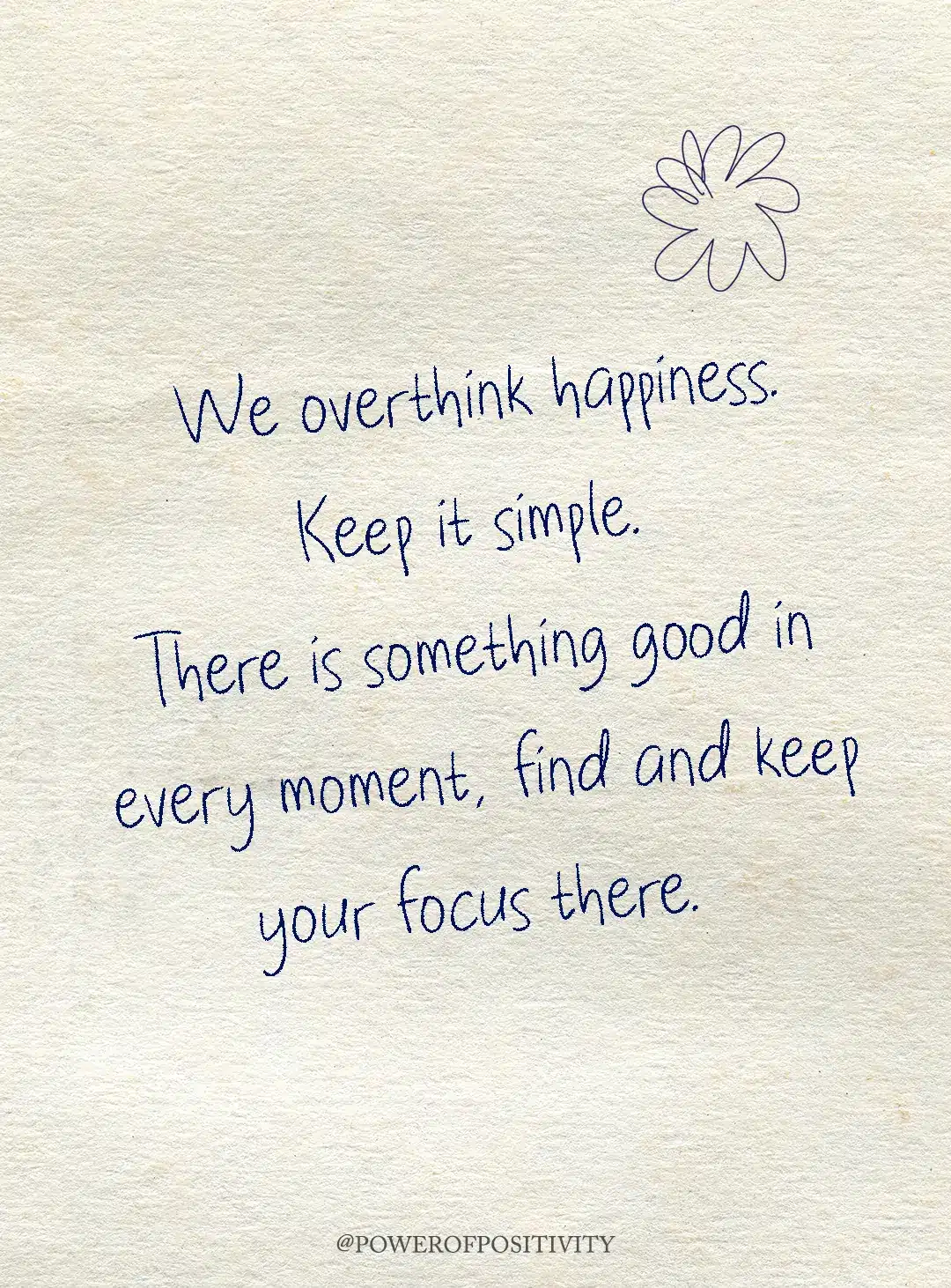
Final Thoughts: Breaking the Loop Starts With One Interrupt
 Final Thoughts: Breaking the Loop Starts With One Interrupt
Negative thought loops do not end because you outthink them. They loosen when you interrupt them consistently.
Gratitude, when used with clarity and intention, becomes that interruption.
It brings the mind back to what is stable, real, and present, even when life feels demanding.
This practice is not about denying stress or pretending everything is fine.
It is about giving your nervous system moments of relief so it can reset and recalibrate. One prompt. One pause. One steady breath. Over time, those small interruptions add up.
If you want deeper support in building mental clarity and emotional resilience, guided tools like structured gratitude practices, journals, or coaching can help reinforce this process and make it part of your daily life.
The post Gratitude Prompts That Break Negative Thought Loops for Men Who Overthink appeared first on Power of Positivity: Positive Thinking & Attitude.